
You're at the point where a formation decision stops being abstract. The company filing affects your jurisdiction, banking access, legal documents, equity setup, compliance burden, and how ready you are to raise money later. A Stripe Atlas alternative isn't just about who can file fastest, it's about which setup fits your next milestone, whether that's a Delaware C-Corp, a U.S. LLC, or a more local structure. That's why this list is organized by founder need, not by a generic feature checklist.
For founders who want launch visibility after incorporation, I'm also factoring in EarlyHunt as a practical companion. Once the entity is formed and the product is ready, a launch platform can give you persistent listing pages, community voting, and a structured launch window that keeps working after day one. I'll point out where launch timing, backlink opportunity, and post-launch discovery fit into the plan.
Use this guide to narrow the field quickly. The sections below cover a dedicated formation platform for global founders, a lawyer-grade Delaware option, all-in-one compliance stacks, budget-friendly LLC providers, speed-focused services, privacy-first registered agent coverage, and compliance-heavy choices for multi-state or regulated work.
1. StartGlobal
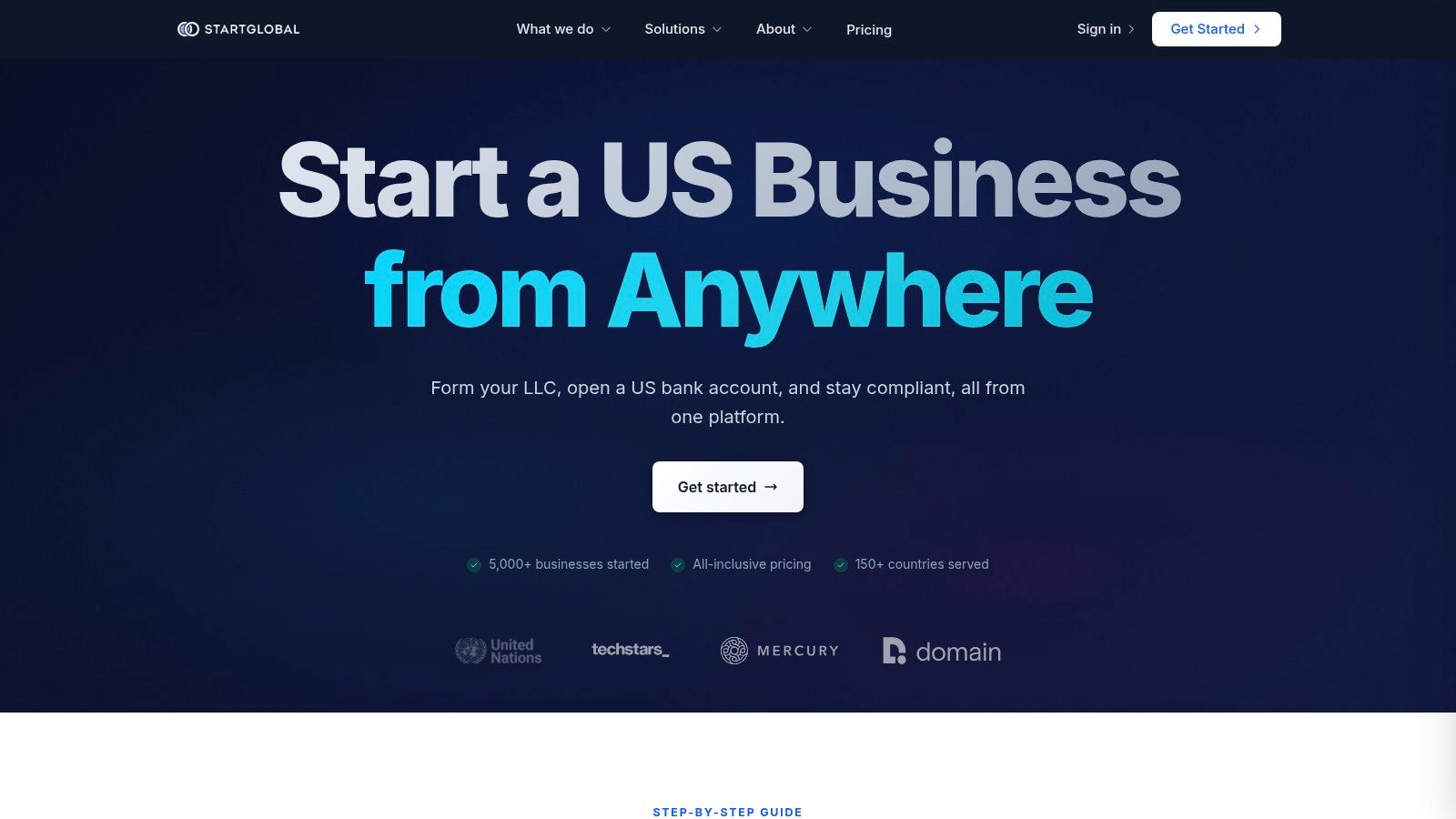
If you're a non-U.S. founder trying to form and run a U.S. company, StartGlobal feels built for the whole journey, not just the filing. It handles LLC formation, EIN application, registered agent service, banking setup support, and ongoing compliance from one online workflow, which matters when you don't want to stitch together five vendors just to get operational. The platform says it works fully online, without a U.S. visit or Social Security Number, and that makes it a strong fit for founders who need the entity, the tax number, and the bank account path to line up quickly.
StartGlobal is especially useful when the pain isn't incorporation itself, it's everything that follows it. The package includes state filing tracking, name availability checks, annual or biennial report preparation, and practical operating tools like a U.S. mailing address, phone number forwarding, invoicing, and customer support software. It also bundles bookkeeping, federal tax filing, and a managed LLC plan, so the company doesn't get stranded after the initial filing is done.
Practical rule: choose a service like this when the real problem is operational continuity, not just getting a certificate.
For founders comparing a Stripe Atlas alternative, this is the clearest match if you need a single vendor for formation plus day-to-day admin. It's also relevant if remote banking is a blocker, because the service guides applications with partners such as Mercury and Lili, which reduces friction for founders outside the U.S. The transparent all-inclusive pricing model is another advantage, since it reduces the chance that basic compliance tasks turn into a pile of add-ons later. See the service overview at StartGlobal, an alternative to Stripe Atlas.
When StartGlobal makes sense
StartGlobal is the right choice when you want global availability, a remote-first setup, and a formation flow that doesn't stop at filing. It's also a sensible pick if you prefer practical back-office support over a piecemeal stack of formation, tax, mail, and payment tools. If your goal is to form the company, open banking, stay compliant, and keep basic operations in one place, StartGlobal is one of the more coherent options.
2. Clerky
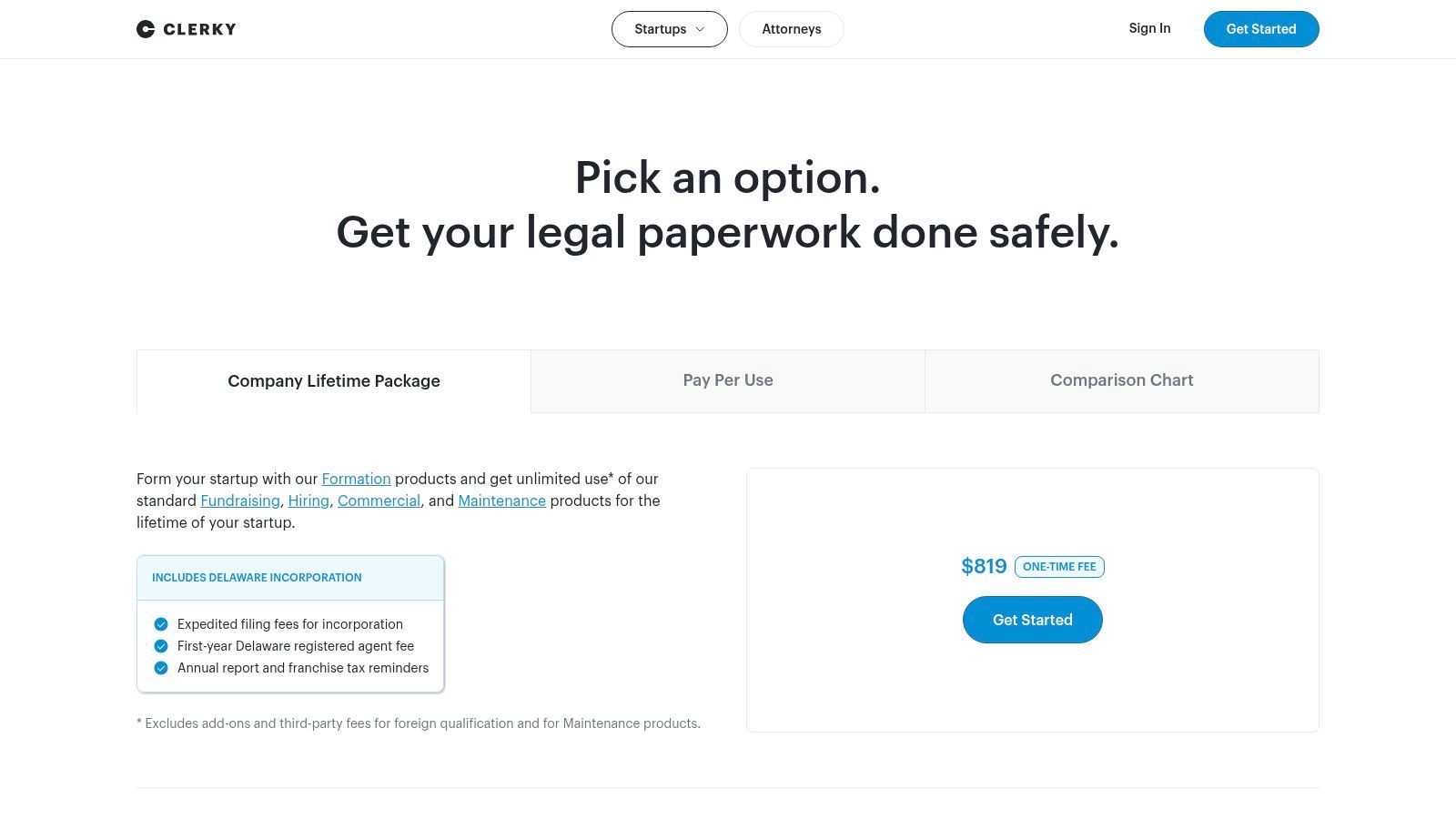
Clerky is for founders who already know they want a Delaware C-Corp and care more about getting the legal workflow right than buying a broad business-services bundle. The platform leans hard into startup-standard documents, which is useful if you expect investors, SAFE rounds, stock issuance, or later hiring to follow fast after formation. Its value is less about being the cheapest path and more about keeping the legal record clean from the start.
The strength here is the post-incorporation workflow. Clerky supports the operational steps founders often delay, like bylaws, founder stock, 83(b) reminders, IP assignment, and fundraising documents. Those aren't glamorous tasks, but they matter when diligence starts and someone asks whether the company owns its code and equity structure. For venture-track teams, that's the point of paying for a more opinionated stack.
Investors recognize standard Delaware workflows faster than improvised paperwork. That's the main reason a lawyer-grade setup can save time later.
Clerky is not a fit for everyone. It's C-Corp only, so it won't help if you need an LLC, and its price is harder to justify if you're building a lifestyle business or a founder-led service company. Still, if you're choosing a Stripe Atlas alternative because you want the Delaware path and want it done in a more legal-first way, Clerky belongs near the top of the shortlist. The pricing and product details are on Clerky's pricing page, and founders mapping their launch sequence can pair the legal setup with EarlyHunt's launch guide once the company is ready to go public.
Best fit
Choose Clerky when your next step is fundraising, equity grants, and a startup cap table that needs to look normal to investors and counsel. It's less attractive if you're optimizing for LLC simplicity, broad operational support, or the lowest entry cost.
3. Firstbase
Firstbase works well for founders who want a menu of services rather than a single narrow filing product. It supports Delaware or Wyoming formation, then lets you add registered agent coverage, accounting, annual tax filing, and mailroom services as needed. That makes it a practical middle ground for founders who want more than a filing receipt but don't want to commit to a fully bundled compliance platform from day one.
The appeal is flexibility. You can start with formation, then layer in banking integrations, virtual mail, or accounting only when the business needs them. That's useful if you're testing a product or waiting for revenue to justify ongoing admin spend. It also helps founders who want to control total cost by choosing services selectively instead of paying for a large subscription bundle before they need it.
Firstbase is also marketed to non-U.S. founders, which matters if you're operating remotely and need setup support across borders. The trade-off is that the registered agent is an extra line item, so the headline price won't reflect what you pay once you add the support pieces many founders end up needing. The company's pricing and package structure are on Firstbase pricing, and founders comparing launch timing can use EarlyHunt's alternative overview after they've locked the entity.
Watch the bundle math. A flexible platform can be cheaper than a subscription-heavy one, but only if you don't automatically turn on every add-on.
Best fit
Firstbase is a strong option if you want formation plus optional compliance, tax, and banking support, and you like being able to assemble the stack gradually. It's less ideal if you want everything bundled into one fixed monthly operating plan.
4. doola
doola is built for global founders who want a done-for-you U.S. formation and compliance stack without needing a U.S. SSN. That positioning makes it attractive for founders who'd rather buy convenience than assemble a filing, bookkeeping, and tax workflow from separate vendors. It supports both LLCs and C-Corps, which gives you more room to choose based on the business model instead of the platform forcing a single legal form.
The biggest practical benefit is continuity. Formation, EIN procurement, bookkeeping, annual compliance, and tax filing can all sit under one vendor, which reduces the chance that a founder misses a filing because the mail went to the wrong place or a third-party accountant never got the paperwork. The dashboard and reminders also help when the business is small and admin work is easy to postpone.
That said, doola's subscription model can cost more than a basic filing service, especially if you only need the company formed and nothing else. For founders who are still validating the business, that's the main trade-off. You're paying for convenience and coverage, not just the incorporation filing. Review the current plan structure on doola pricing before you commit.
Where doola fits
Choose doola when you want one vendor to cover the formation, compliance, bookkeeping, and tax workflow, especially if you're a non-U.S. founder who values handholding. It's less compelling if you only need a basic entity and can manage post-launch admin yourself.
5. ZenBusiness
ZenBusiness is the classic low-entry-price choice for founders who want a simple LLC path without paying for a premium startup stack. Its appeal is straightforward, a $0 service-fee entry point plus state fees, clear package tiers, and a broad add-on marketplace if you want help with EINs, operating agreements, or websites later. For many small businesses, that's enough.
The downside of a broad marketplace is that the final bill can climb if you keep selecting extra services. That's not unique to ZenBusiness, but it matters because founders often compare the cheapest headline price and forget that year-two subscriptions and add-ons may drive the actual total. It's a sensible fit if you know your needs and keep the bundle tight.
ZenBusiness is also useful if you're forming a company and want a recognizable SMB provider with a large help footprint. The support documentation and tiered plan structure can reduce confusion when you're navigating a state-by-state filing process for the first time. See the current options on ZenBusiness LLC formation.
Practical rule: buy a starter plan only if you're comfortable handling the rest yourself or outsourcing it later.
Best fit
ZenBusiness makes sense when the priority is low entry cost and broad formation coverage, not specialized startup legal workflows. It's a practical option for founders who want to get the entity in place and move on.
6. LegalZoom
LegalZoom is best understood as a brand-name legal ecosystem, not just a filing site. For founders who want an LLC or corporation with access to a broad document library and optional attorney support, that matters. It's especially helpful when the decision isn't just “file or don't file,” but “how much legal help do I want available after formation.”
The platform's appeal is breadth. If you need a business formation flow plus templates, compliance help, and a more general small-business legal toolkit, LegalZoom gives you that environment. The basic entry point is attractive for budget-conscious founders, but the better reason to choose it is confidence that you can keep using the same provider as the business grows.
The limitation is cost creep. Registered agent service isn't bundled in the base plans, and subscriptions can raise year-two cost if you retain extra services. That means LegalZoom works best for founders who value the ecosystem and legal support enough to justify it. Review the current packages on LegalZoom business formation.
Best fit
Use LegalZoom if you want a familiar provider, a large document library, and the option to access legal help beyond the initial filing. It's less attractive if your priority is a narrow, low-cost formation-only workflow.
7. Bizee
Bizee is still one of the most recognizable names in the $0 LLC category, and it's a good pick for budget-conscious founders who want a free first-year registered agent on many plans. It supports a broad range of entity types, including LLCs, S-Corps, C-Corps, and nonprofits, so it's a flexible starting point if you're not yet sure which structure you need.
Where Bizee shines is basic setup volume and familiarity. If you want a straightforward filing process and don't mind working within a tiered package model, it's easy to understand and widely used. The client dashboard also gives you a central place to store documents and track the company.
The main caution is the same one that applies to many budget-first providers, renewal costs and add-ons can add up after the first year. If you need registered agent renewal, extra compliance help, or additional services, the first-year bargain may not remain a bargain. See the current package structure at Bizee business formation, and if launch visibility matters later, keep EarlyHunt pricing in mind for the post-formation phase.
Budget tip: compare the first-year offer and the renewal path before you buy, not after.
Best fit
Bizee works best for founders who want a low-friction filing with a strong introductory offer and a bundled first-year registered agent. It's weaker if you want a lean long-term cost structure or fewer upsells.
8. BetterLegal
BetterLegal is for founders who value clarity and speed over ecosystem depth. The company leans into flat-fee formation, a quick filing posture where state rules allow it, and a simple service menu. That makes it useful if your main complaint about formation platforms is that they bury the actual total behind a maze of checkboxes.
The trade-off is that the product is narrower than larger platforms. You won't get as many built-in startup extras, and registered agent or related services may be sold separately. For founders who already have counsel, an accountant, or a separate banking workflow, that simplicity is a feature, not a limitation.
BetterLegal is a strong option when you know exactly what you need and you don't want to spend an hour comparing upsells. The pricing and service layout are on BetterLegal services, which is worth checking if you're trying to move from decision to filing quickly.
Best fit
Choose BetterLegal if you want a direct, flat-fee filing path with fewer moving parts. It's less useful when you want a full startup operations stack around the incorporation.
9. Swyft Filings
Swyft Filings is one of the easier providers to evaluate because the package grid is relatively clear. That matters when founders are comparing a basic entry tier, a faster standard option, and a premium path with more processing support. It's a good fit for people who want to see what's included without decoding a lot of vague marketing language.
Its appeal is package transparency. You can compare EIN support, operating agreement options, custom minutes, and registered agent coverage against the plan level, which makes it easier to estimate total cost before checkout. For founders who don't mind a packaged approach, that saves time and reduces surprises.
The downside is that many useful items live in paid tiers or as add-ons. If you need a registered agent, virtual address, or extra legal services, the total climbs. Still, for straightforward state formation with a visible upgrade path, it's a solid middle-market option. Current details are available on Swyft Filings.
Best fit
Swyft Filings is the right move when you want simple package comparison and a clear path from basic formation to faster processing. It's less compelling if you want a highly specialized startup legal stack or an ultra-low long-term cost.
10. Northwest Registered Agent
Northwest Registered Agent is the option founders pick when privacy and dependable registered-agent service matter more than flashy launch extras. Its reputation is built on consistent registered agent coverage across all 50 states, use of its own addresses, and a straightforward service model that doesn't try to sell you a whole startup ecosystem on the side.
This is the right kind of provider if your biggest concern is staying in good standing and keeping your public footprint tidy. It's also useful for founders who want formation support but don't need a long menu of bundled perks. The formation service exists, but the core product is reliable registered-agent administration and stable renewal handling.
The trade-off is fewer startup ecosystem perks. If you want banking introductions, launch tools, or bundled operations software, look elsewhere. If you want a provider that does the compliance basics well and keeps the relationship simple, Northwest is hard to beat. See the current registered agent offering at Northwest Registered Agent.
Privacy matters when you expect recurring notices, not just a one-time filing. A dependable registered agent is part of the operating system, not a background detail.
Best fit
Northwest is a strong choice if privacy, long-term registered-agent reliability, and clear renewal handling are your top priorities. It's less attractive if you want broad startup tooling or bundled launch support.
11. Harbor Compliance
Harbor Compliance is the most serious choice on this list if your business has multi-state exposure, licensing research needs, or regulated-market complexity. It's built around compliance infrastructure, not casual formation. That makes it a better fit for teams that expect filings, document control, and jurisdiction-specific requirements to keep expanding over time.
The practical upside is stronger document handling and more structured support around entity management, foreign qualification, and licensing research. That's useful if you're entering a state where the administrative burden is real, or if the company's operating model depends on clean records and secure delivery of notices. The service also makes sense when you care about continuity across jurisdictions rather than a one-off filing.
The trade-off is price. Compliance-heavy bundles cost more than bare-bones formation services, and that's normal. If your business is simple and local, you probably don't need this level of support. If your footprint is growing across states or into regulated work, Harbor Compliance is the kind of provider that can save friction later. Review the details on Harbor Compliance registered agent service.
Best fit
Choose Harbor Compliance when licensing, regulated activity, or multi-state complexity is central to the business. It's overkill for a simple LLC, but valuable when compliance becomes a real operating function.
Top 11 Stripe Atlas Alternatives
| Provider | Core offering | UX & reliability (★) | Pricing / Value (💰) | Best fit (👥) | Standout (✨ / 🏆) |
|---|---|---|---|---|---|
| StartGlobal | End-to-end US company formation, EIN, remote banking help, registered agent, bookkeeping & AI assistant | ★★★★☆ | 💰 Transparent, all‑in pricing; global availability | 👥 Non‑US founders needing full formation + ops | ✨ Neo AI agent, banking partner pathways, 🏆 global coverage |
| Clerky | Delaware C‑Corp formation + lawyer‑grade, investor‑standard documents & post‑incorp workflows | ★★★★☆ | 💰 Mid‑range; higher than basic DIY services | 👥 High‑growth startups, YC‑style founders | ✨ Investor‑recognized docs, strong fundraising templates |
| Firstbase | Delaware/Wyoming formation, EIN, banking integrations, mailroom, optional accounting/compliance | ★★★★ | 💰 Modular pricing; add‑ons & Firstbase One subscription | 👥 Founders wanting flexible one‑stop modular tools | ✨ Banking integrations, virtual mailroom |
| doola | Formation (LLC/C‑Corp) + subscription bundles for compliance, bookkeeping, taxes & dashboard | ★★★★ | 💰 Subscription model, higher annual cost but all‑in one | 👥 Non‑US founders wanting done‑for‑you compliance | ✨ Bundled compliance + tax services, dissolution on tiers |
| ZenBusiness | LLC & corp formation, EIN, operating agreements, compliance subscriptions & add‑ons | ★★★★ | 💰 $0 entry + state fees; subscriptions can add year‑2 cost | 👥 SMBs and budget founders wanting guided setup | ✨ $0 starter tier, broad add‑on marketplace |
| LegalZoom | Formation + large legal document library and paid attorney consults | ★★★★ | 💰 $0 + state fees base; extra for attorney/subscriptions | 👥 Small businesses needing legal docs & consults | ✨ Extensive document library, brand recognition |
| Bizee (Incfile) | Formation (LLC/C‑Corp/etc.), client dashboard, free first‑year registered agent on many plans | ★★★★ | 💰 $0 entry; watch for RA renewals and upsells | 👥 Budget‑conscious founders wanting quick setup | ✨ Free first‑year RA, long track record |
| BetterLegal | Fast, flat‑fee formation with simple menus and quick turnaround | ★★★★ | 💰 Flat, transparent pricing; fewer upsells | 👥 Founders who prioritize speed & clear cost | ✨ Fast filing emphasis, straightforward offerings |
| Swyft Filings | Tiered packages (Basic to Premium), EIN, RA options, transparent package grid | ★★★★ | 💰 $0 basic up to premium for same‑day/speed | 👥 Founders who want clear apples‑to‑apples packages | ✨ Side‑by‑side package grid, same‑day top tier |
| Northwest Registered Agent | Registered agent focus + formation; privacy and steady RA pricing | ★★★★☆ | 💰 Transparent RA pricing (commonly ~$125/yr renewals) | 👥 Privacy‑focused entities & long‑term RA needs | ✨ Privacy‑first RA service, 🏆 reliable RA reputation |
| Harbor Compliance | Enterprise‑grade compliance, multi‑state RA, licensing research, secure document handling | ★★★★ | 💰 Pricier, aimed at enterprise/multi‑state use cases | 👥 Regulated or multi‑state organizations | ✨ SOC2 storage, licensing research, 🏆 robust compliance tooling |
Choose the Platform That Matches Your Next 12 Months
The cleanest way to choose a Stripe Atlas alternative is to start with your next 12 months, not your aspiration deck. Pick Clerky if you need a Delaware C-Corp and investor-ready legal workflows. Choose Firstbase or doola if you're a global founder who wants broader operational support around formation, compliance, and banking. Go with ZenBusiness, LegalZoom, or Bizee if your priority is a lower entry price and general formation coverage without a specialized startup stack.
If speed and package clarity matter most, BetterLegal or Swyft Filings are the easier reads. If privacy and stable registered-agent service are the core issue, Northwest Registered Agent is the cleaner fit. If your business crosses states, needs licensing help, or operates in a more regulated environment, Harbor Compliance is built for that reality.
Before you file, run a simple implementation check. Confirm the entity type and jurisdiction first, then compare first-year and renewal costs. Verify the EIN and banking requirements, review exactly which documents are included, assign ownership and IP correctly, and put every compliance deadline on the calendar before the notices start arriving.
Formation is only the first launch step. Once the company and product are ready, EarlyHunt gives founders a weekly Monday-to-Sunday launch cycle, persistent project pages, community voting, and launch content that can keep discovery going after the initial spike. Its Free Launch, Nofollow Launch, and Premium Launch options make it easy to choose the exposure level that fits your plan, and the Premium path includes a guaranteed dofollow backlink plus a launch kit for promotion. Review the current details at EarlyHunt before you pick a launch path.
Compare the short list, check the actual renewal math, and choose the provider that fits the business you're building now. Then plan your EarlyHunt launch for the moment the company is ready for discovery, traffic, and early users.