
EarlyHunt vs Product Hunt: What's Better for Early Traction?
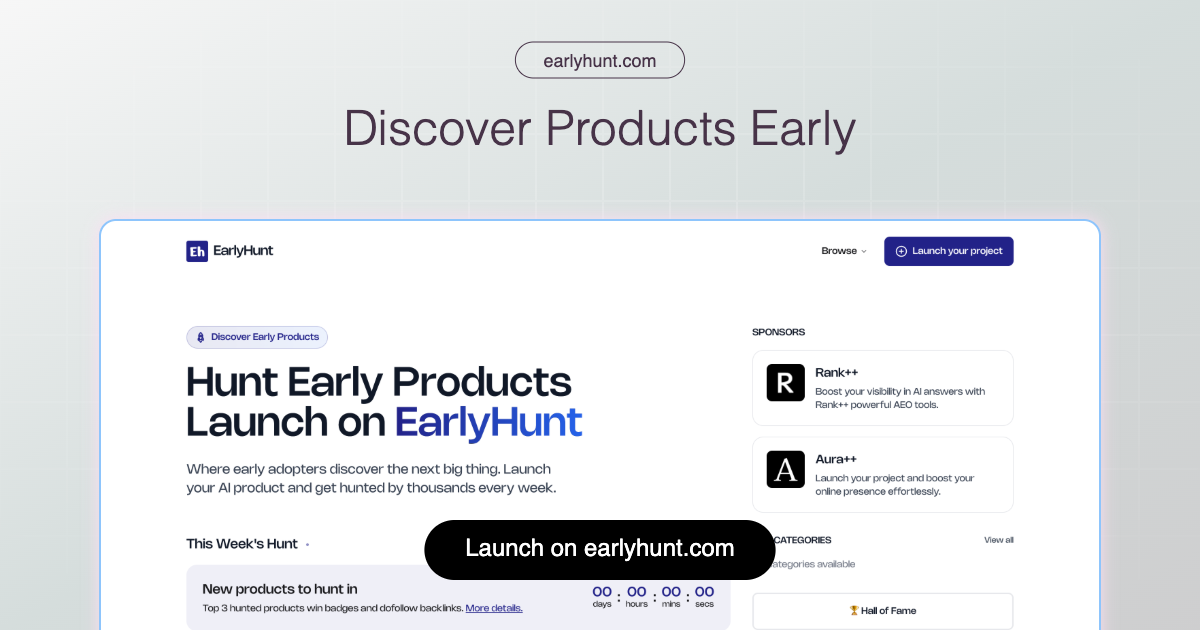
Discover proven strategies for earlyhunt vs product hunt: what's better for early traction?. Learn how EarlyHunt and the ecosystem of launch platforms can help you build early traction and scale your startup.
Introduction
In the fast-paced world of startups, gaining early traction is crucial for long-term success. Founders often face a dilemma when choosing the right platform to launch their products. With options like EarlyHunt and Product Hunt, it’s vital to understand which platform can provide the best early momentum. This article will explore EarlyHunt and Product Hunt, comparing their features and benefits to help you make an informed decision.
Understanding Early Traction
Early traction refers to the initial interest and engagement your product receives after its launch. This phase is critical for validating your idea and attracting potential users or investors. To effectively gain traction, you need a strategic approach that goes beyond simple hype.
Why Early Traction Matters
- Establishes credibility and trust with early adopters.
- Helps refine your product based on user feedback.
- Increases visibility and discoverability within your target market.
EarlyHunt: The Weekly Launch Platform
EarlyHunt offers a unique weekly launch system designed specifically for startups aiming for early traction. Unlike platforms that focus on one-day launches, EarlyHunt provides sustained visibility over time.
Benefits of EarlyHunt
- Consistent Exposure: Products are showcased weekly, allowing for ongoing engagement.
- Focused Audience: Attracts founders and early adopters looking for innovative products.
- Community Support: Engage with a community of like-minded entrepreneurs and receive valuable feedback.
How EarlyHunt Fits into the Ecosystem
The EarlyHunt ecosystem is designed to funnel users through a series of platforms that enhance visibility and traction:
- Aura++: Discover early-stage products daily. Learn more.
- EarlyHunt: Gain weekly traction. Launch here.
- IndieHunt: Extend your reach through curated indie product showcases. Explore IndieHunt.
- Rank++: Optimize for AI search visibility. Use Rank++.
Product Hunt: The One-Day Launch Phenomenon
Product Hunt is a well-known platform that allows products to be launched in a single day, gaining immense visibility within a short period. While this can create initial buzz, it often lacks the sustained engagement necessary for long-term growth.
Pros and Cons of Product Hunt
| Pros | Cons |
|---|---|
| High visibility on launch day | Short-lived interest |
| Large user base | Competitive environment |
| Immediate feedback | May not cater to niche products |
Weekly Exposure vs. One-Day Hype
One of the critical differences between EarlyHunt and Product Hunt is the approach to exposure. EarlyHunt's weekly launch model benefits startups in several ways:
- Building Momentum: Consistent exposure allows products to build momentum over time, rather than relying on a single day.
- Ongoing Feedback: Weekly launches facilitate continuous feedback, enabling founders to make necessary adjustments and improvements.
- Community Engagement: Engaging with the community over time fosters deeper relationships and trust.
Strategies for Building Momentum Before Launch
Here are some effective strategies that founders can implement to build momentum before launching on EarlyHunt:
- Engage with Your Audience: Start discussions on social media or relevant forums to gauge interest.
- Leverage Email Marketing: Build an email list and share updates to create anticipation.
- Create Teasers: Share sneak peeks or behind-the-scenes content to spark curiosity.
Post-Launch Growth Strategies
After your product is launched, it’s essential to have a strategy in place to maintain and grow your user base:
- Collect User Feedback: Use insights from early adopters to improve your product.
- Utilize Social Proof: Showcase testimonials and reviews to build credibility.
- Explore SEO and AEO: Optimize your content for search engines using tools like Rank++ to improve visibility.
Conclusion: Choosing the Right Platform
When deciding between EarlyHunt and Product Hunt, it’s essential to consider your goals and the type of traction you seek. EarlyHunt's weekly launch model may be more beneficial for founders looking for sustained engagement and feedback, while Product Hunt can offer immediate visibility but lacks long-term momentum.
If you are ready to launch your product and gain early traction, consider utilizing the EarlyHunt submission page for your next big idea. Additionally, extend your reach with IndieHunt and optimize your search visibility with Rank++.
For more insights on product launches, visit our blog or check out our pricing page to learn more about our services.
Related Studio Posts
Weekly vs Daily Launch Platforms Compared
Discover proven strategies for weekly vs daily launch platforms compared. Learn how EarlyHunt and the ecosystem of launch platforms can help you build early traction and scale your startup.
Best Weekly Launch Platforms for No-Code Products
Best Weekly Launch Platforms for No-Code Products In today's fast-paced digital landscape, no-code products have emerged as a game-changer for entrepreneurs and innovators.
Best Weekly Launch Platforms for SaaS
Best Weekly Launch Platforms for SaaS In the competitive landscape of Software as a Service (SaaS), launching your product effectively is crucial for success.
Best Weekly Launch Platforms for AI Tools
Best Weekly Launch Platforms for AI Tools In the rapidly growing landscape of AI tools, launching your product effectively is crucial for standing out.