
Pre-Launch Checklists for SaaS Founders
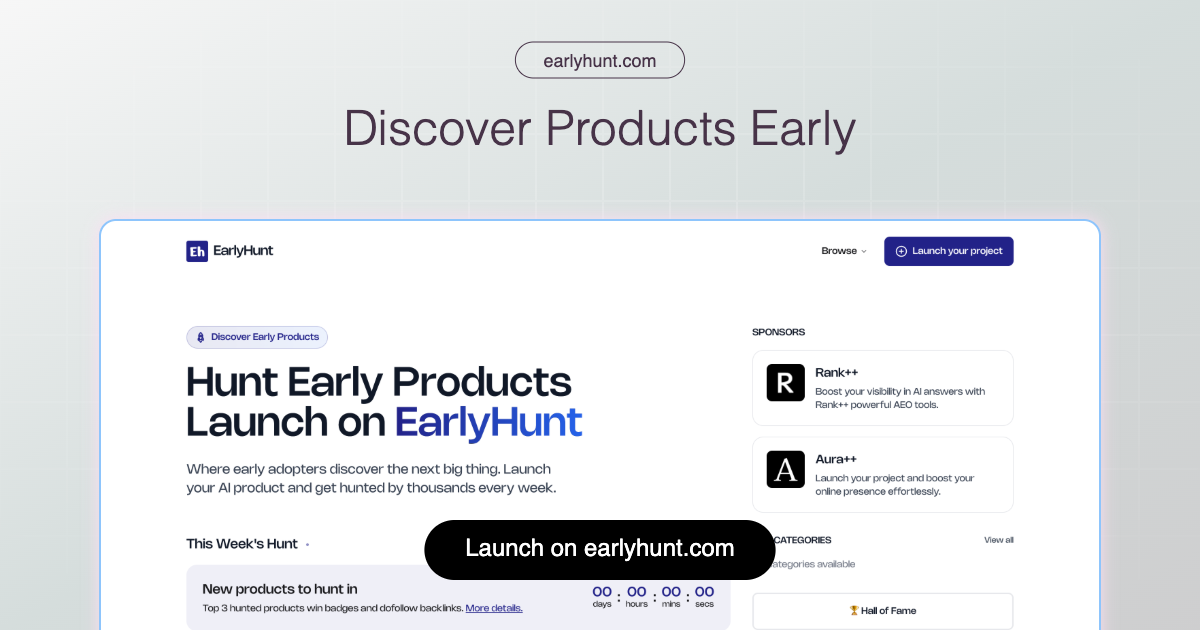
Discover proven strategies for pre-launch checklists for saas founders. Learn how EarlyHunt and the ecosystem of launch platforms can help you build early traction and scale your startup.
Pre-Launch Checklists for SaaS Founders
Launching a Software as a Service (SaaS) product can be one of the most exhilarating yet challenging experiences for founders. With numerous tasks to juggle, it’s crucial to have a structured approach. This blog post presents a comprehensive pre-launch checklist designed specifically for SaaS founders, helping you gain early traction and build momentum effectively.
Understanding Early Traction
Early traction is the initial momentum your product gains in the market, indicating that real users are engaging and finding value in your offering. Achieving this early traction is essential for long-term success. Here are some key benefits:
- Validates your product idea through real-world usage
- Builds credibility and social proof
- Attracts investors and partners
- Increases visibility and aids in marketing efforts
The Ecosystem Flow
Leveraging an ecosystem of launch platforms can significantly enhance your product's visibility. Here’s how the flow works:
- Aura++: A daily discovery platform for early-stage products.
- EarlyHunt: A weekly launch platform designed to build early traction.
- IndieHunt: A curated platform for indie products to extend their reach.
- Rank++: AEO tools designed to improve AI search visibility.
Why Weekly Exposure Beats One-Day Launch Hype
Many founders make the mistake of relying solely on a one-day launch event. However, this approach can lead to fleeting visibility. Here are some reasons why a weekly exposure strategy is more effective:
- Continuous engagement with your audience
- Consistent feedback loops for product improvement
- Ability to pivot based on real-time data
- Long-term relationship building with potential customers
Pre-Launch Checklist
1. Define Your Target Audience
Understanding who your customers are is crucial. Create buyer personas that capture demographics, pain points, and needs.
2. Build a Landing Page
Your landing page is the first interaction potential users will have with your product. Ensure it includes:
- A compelling headline
- Clear value propositions
- A strong call-to-action (CTA)
- Social proof (testimonials or early user feedback)
3. Create a Pre-Launch Marketing Plan
To generate buzz, develop a marketing plan that outlines various channels you will use:
- Email marketing to your existing network
- Social media campaigns
- Content marketing (blogs, videos, etc.)
4. Set Up Analytics Tracking
Implement tools like Google Analytics or Mixpanel to track user interactions. This data will be invaluable for post-launch adjustments.
5. Prepare for Feedback
Establish channels for collecting user feedback, such as surveys or direct interviews. This will help you iterate quickly and improve the product.
Building Momentum Before Launch
Engage Early Adopters
Identify and connect with early adopters who are willing to test your product. Offering them exclusive access or incentives can help you gather valuable insights.
Utilize Existing Platforms
Take advantage of platforms like EarlyHunt to submit your product for weekly visibility and traction. Here’s how:
- Submit your project on EarlyHunt to reach potential users.
- Engage with the community through comments and discussions.
Leverage Social Media
Use social media to build excitement. Share behind-the-scenes content and updates to keep your audience engaged. Consider creating a countdown to your launch date.
Post-Launch Growth Strategies
1. Monitor User Engagement
After launch, keep an eye on user behavior. Analyze which features are used most frequently and which ones need improvement.
2. Implement AEO Strategies
With the rise of AI search engines, utilizing AEO (Answer Engine Optimization) techniques can significantly enhance your product's visibility. Tools like Rank++ can help optimize your content for better search performance.
3. Foster Community Engagement
Building a community around your product can lead to long-term loyalty. Consider creating forums or groups where users can interact, share experiences, and provide feedback.
4. Analyze and Iterate
Use the feedback and analytics data to make informed decisions about product updates and marketing strategies. Regularly iterate based on user needs and market trends.
Conclusion
Launching a SaaS product is a multifaceted endeavor, but with a structured pre-launch checklist and a focus on early traction, you can set the stage for success. Embrace the ecosystem flow of platforms like Aura++, EarlyHunt, IndieHunt, and Rank++ to maximize your reach and impact.
Ready to launch your product? Start by submitting your project on EarlyHunt for immediate exposure. Harness the power of AI for search visibility with Rank++, and extend your reach with IndieHunt. Let’s make your launch a success!
Related Studio Posts
How to Collect Feedback Before Scaling
Discover proven strategies for how to collect feedback before scaling. Learn how EarlyHunt and the ecosystem of launch platforms can help you build early traction and scale your startup.
Launching Early vs Launching Perfect: What Works?
Discover proven strategies for launching early vs launching perfect: what works?. Learn how EarlyHunt and the ecosystem of launch platforms can help you build early traction and scale your startup.
How to Validate a Product Before Going Public
Discover proven strategies for how to validate a product before going public. Learn how EarlyHunt and the ecosystem of launch platforms can help you build early traction and scale your startup.
Best Soft Launch Platforms for Startups
Discover proven strategies for best soft launch platforms for startups. Learn how EarlyHunt and the ecosystem of launch platforms can help you build early traction and scale your startup.