

The Evolving World of Design Tools: A Spotlight on AI-Driven Mockups
In the rapidly transforming landscape of design tools, the integration of artificial intelligence is reshaping how creatives approach their work. As AI continues to permeate various industries, its impact on design is particularly noteworthy. The demand for efficient, high-quality, and customizable design solutions has never been greater. This shift is fueled by the need for speed and precision in a competitive market where visual presentation can significantly influence brand perception and consumer engagement.
With the advent of AI-powered tools, designers can now automate routine tasks, allowing them to focus more on creativity and strategy. This evolution is crucial for both individual designers and teams, as it directly addresses the growing pressure to deliver more with fewer resources. As a result, tools like Modor are emerging as valuable assets for professionals seeking to enhance their workflow.
The Design Challenge: Bridging the Gap Between Creativity and Efficiency
Designers often face the challenge of balancing creativity with efficiency. Traditional design processes can be time-consuming, requiring significant manual effort to produce high-quality mockups. This can be particularly daunting for small teams or individual creators who may lack the resources of larger organizations. The need for accessible, user-friendly tools that can deliver professional results is evident.
Current solutions often fall short by either being too complex for non-experts or too simplistic to meet professional standards. Many designers resort to time-intensive methods or compromise on quality to meet deadlines. This gap in the market has paved the way for innovative solutions that can streamline the design process while maintaining high standards of quality.
Innovative Responses to Design Needs: Introducing Modor
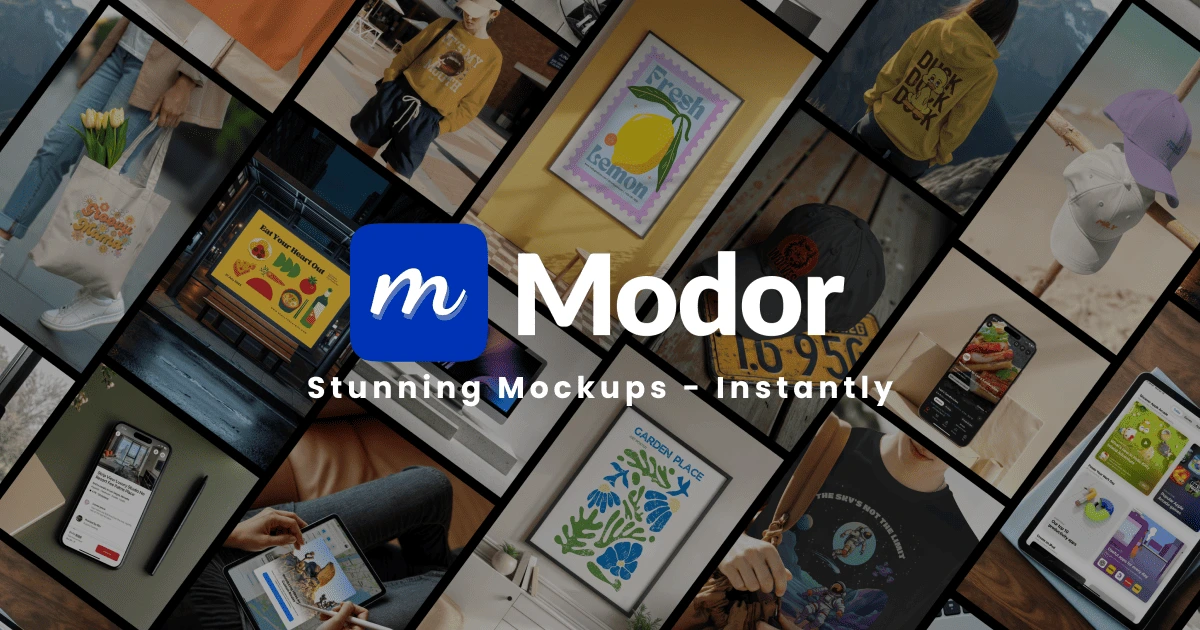
Enter Modor, an AI-driven platform designed to simplify the creation of professional product and print mockups. Modor serves as an example of how technology can address the inefficiencies in traditional design workflows. By offering a free online mockup generator, Modor allows users to customize t-shirts, posters, and devices quickly and easily, supporting both individuals and teams.
Modor’s appeal lies in its extensive library of over 10,000 professionally designed mockup templates. This resource empowers users to visualize their designs in realistic settings without the need for extensive design expertise. The platform’s AI capabilities ensure that mockups are not only quick to produce but also optimized for various platforms, enhancing their utility across different applications.
Modor in Action: Practical Applications for Designers
Modor’s practical value becomes evident when examining its use cases. For individual designers or small teams, Modor offers a means to streamline their workflow significantly. By leveraging AI-powered mockups, users can focus on refining their creative concepts rather than getting bogged down in technical details.
Consider a freelance graphic designer who needs to present multiple design concepts to a client within a tight deadline. Using Modor, they can quickly generate several mockups, showcasing their ideas in various contexts, such as apparel or tech devices. This not only saves time but also enhances the quality of the presentation, providing a competitive edge.
For larger teams, Modor acts as a central tool in the design process, facilitating collaboration and consistency across projects. Its ease of use ensures that team members at different skill levels can contribute effectively, while the high-definition, print-ready outputs support professional-grade results.
Key Differentiators: What Sets Modor Apart?
Modor distinguishes itself through its freemium pricing model, making professional design tools accessible to a broad audience. This approach democratizes design, particularly for startups and small businesses with limited budgets. While the tech stack is not specified, Modor’s focus on AI-powered simplicity and extensive template library provides a clear advantage.
Another notable aspect is Modor’s adaptability. By offering features that cater to both novice and advanced users, Modor ensures a broad appeal. This dual focus on ease of use and advanced capabilities is a critical differentiator in a crowded market, where many tools cater exclusively to one end of the skill spectrum.
Who Can Benefit from Modor?
Modor is particularly beneficial for freelancers, small design teams, and startups seeking to enhance their visual content without incurring significant costs. Professionals who regularly need to produce high-quality mockups for presentations, marketing materials, or client pitches will find Modor’s offerings especially valuable.
Additionally, educators and students in design-related fields can leverage Modor as a learning tool, gaining hands-on experience with professional-grade resources. This enables a deeper understanding of design principles and the role of AI in modern workflows.
About the Creator: Melissa Durrah
Melissa Durrah, the founder of Modor, is driven by a vision to simplify the design process through technology. Her background in design and technology equips her with the insights necessary to bridge the gap between creativity and efficiency. By focusing on AI-driven solutions, Melissa aims to empower designers at all levels to achieve their creative potential with less friction.
Under her leadership, Modor continues to evolve, reflecting her commitment to innovation and user-centric design. This aligns with the broader industry trend towards integrating AI into creative workflows, enhancing both productivity and output quality.
The Future of Design Tools: A Look Ahead
As we look to the future, the integration of AI in design tools like Modor is likely to accelerate. This trend represents a significant opportunity for creators to redefine their workflows, achieving greater efficiency without sacrificing creativity. The ongoing evolution of these tools will likely lead to even more sophisticated features, further transforming the industry landscape.
As more designers and teams embrace these technologies, the question remains: how will AI continue to shape not just the tools we use, but the very nature of design itself? This is a space worth watching as the boundaries of possibility continue to expand.
Explore the Modor Launch
Modor's launch on EarlyHunt marks a significant step forward for AI-driven design tools. To explore Modor and see how it can enhance your design workflow, visit the Modor website. For more information about the launch, visit the Modor project page on EarlyHunt.
For founders developing similar innovations, consider submitting your project to EarlyHunt for increased visibility and engagement with early adopters.
Visual preview